

Is Titaura a mango papada – aam papda?
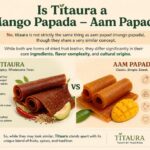
No, titaura is not strictly the same thing as aam papad (mango papada), though they share a very similar concept. While both are forms of dried fruit leather, they differ significantly in their core ingredients, flavor complexity, and cultural origins.
Is Titaura a mango papada – aam papda?
The Main Differences
- Core Fruit: Traditional Indian aam papad is made exclusively from mango pulp (either sweet ripe mango or tangy raw mango). Traditional titaura (also known as paun) is primarily made from lapsi (the Himalayan hog plum), a small, intensely tart fruit native to the Himalayan region.
- Flavor Profile: Aam papad is generally sweet and tangy, sometimes accented with a little chaat masala or black salt. Titaura, however, is famous for an aggressive “flavor explosion”. Titora is heavily spiced with pungent ingredients like red chili, cumin, hing (asafoetida), and salt, making it heavily sour, salty, sweet, and intensely fiery all at once.
- Varieties: Aam papad is almost always sold as flat, dried sheets or layered squares. Titora comes in many physical formats. It can be dry strips – spicy and tangy (piro patta), dust-coated round chunks (lapsi dallo), or even served drenched in a thick, sticky, spicy liquid syrup (jhol titaura).
Why the Confusion?
Because the underlying culinary technique—boiling fruit pulp, mixing it with spices, spreading it onto greased plates, and sun-drying it—is identical, people often call titaura the “Himalayan aam papad” to explain it to foreigners. Furthermore, modern variations of titaura can be made using raw mango or tamarind, which narrows the gap between the two snacks even further.
Are you looking for more on Info on authentic titaura, or would you like eo know exactly What is Titaura? Or a homemade recipe for making a spicy, Himalayan-style mango titaura? Or Simply Hoew to store a Titaura
